

DreamHost no longer sells a plan called Shared Starter. Its entry-level shared hosting plan is now Web Hosting Launch, and it's a much bigger plan than the old Starter: it hosts up to 25 websites on 25 GB of NVMe storage, with daily backups included.
The catch is the price after the first year. Launch costs $2.89 a month for the first year ($34.68 upfront), then renews at $10.99 a month. That's still a fair price for what you get, but it's not the "same price forever" deal the old Starter plan was known for.
This review covers what the Launch plan includes, where it falls short, how the pricing really works, and who should pick it.
Contents
1) What Is DreamHost Shared Starter (Now Web Hosting Launch)?
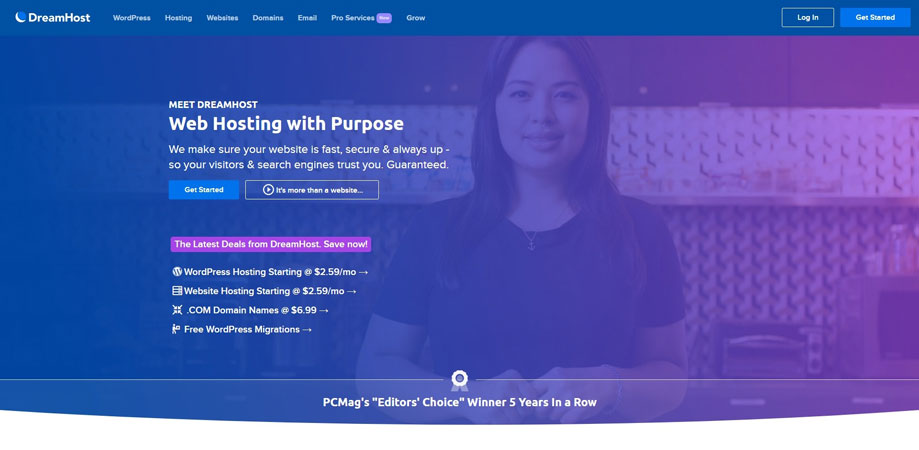
DreamHost offers several types of hosting, including shared web hosting, managed WordPress (DreamPress), VPS, and cloud servers. Shared hosting is the cheapest option and the one most beginners start with.
DreamHost's shared hosting now comes in three plans: Launch, Growth, and Scale. They replaced the old Starter and Unlimited plans. The main differences are the number of websites, storage, and the traffic each plan is sized for.
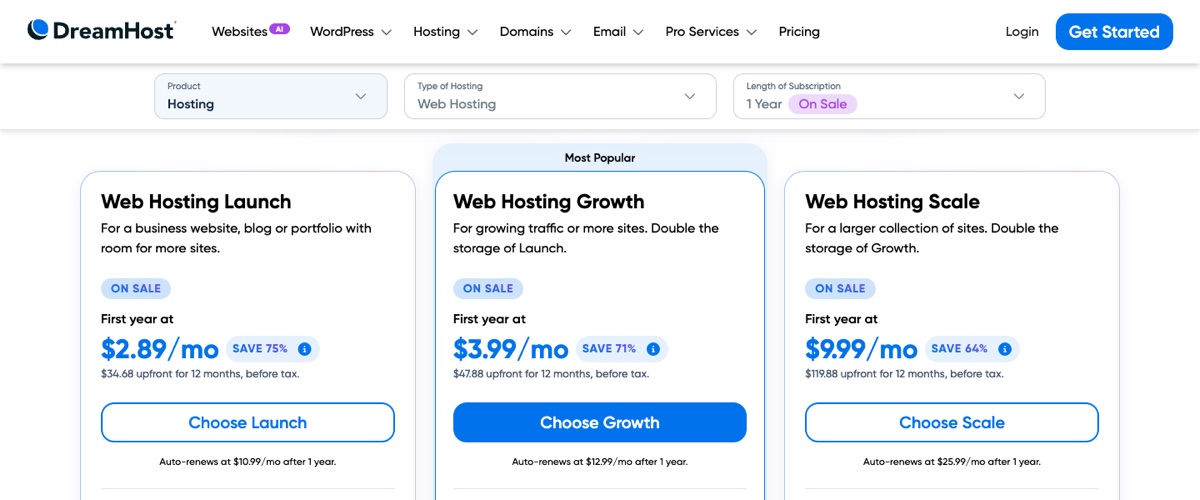
| Plan | Websites | Storage | Suited to | First year | Renews at |
|---|---|---|---|---|---|
| Launch | 25 | 25 GB NVMe | 40,000 visits a month | $2.89/month | $10.99/month |
| Growth | 50 | 50 GB NVMe | 200,000 visits a month | $3.99/month | $12.99/month |
| Scale | 100 | 100 GB NVMe | 400,000 visits a month | $9.99/month | $25.99/month |
Treat the visit numbers as DreamHost's sizing guide rather than a cap. None of the plans meter bandwidth, so a traffic spike won't add a per-GB charge, but DreamHost can still step in if a site uses far more server resources than a shared plan allows.
Here's what the Launch plan includes:
- Host up to 25 websites
- 25 GB NVMe SSD storage
- Unmetered bandwidth
- Daily automated backups
- Free SSL certificates
- Free domain for the first year (annual billing)
- Free domain privacy
- 3 months of free business email (up to 20 mailboxes)
- 30-day money-back guarantee
2) Pros of DreamHost Web Hosting Launch
These are the strongest points of the plan.
Officially Recommended by WordPress.org
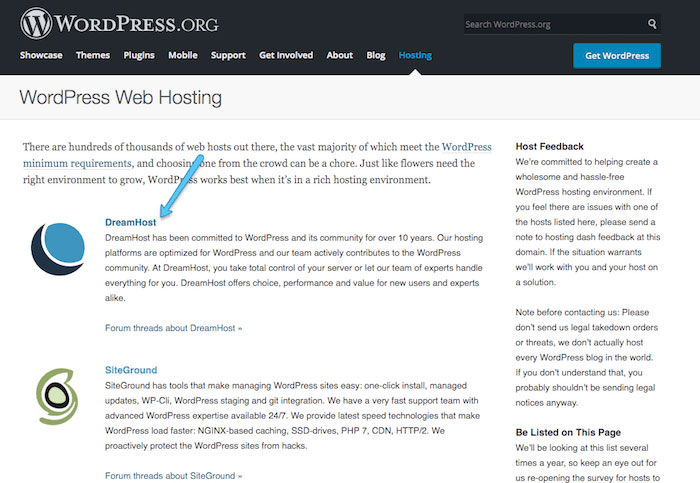
DreamHost is one of the few hosts officially recommended by WordPress.org. That doesn't guarantee speed on its own, but it does mean DreamHost's setup is built around WordPress and that it has a long track record in the WordPress community.
Made for WordPress
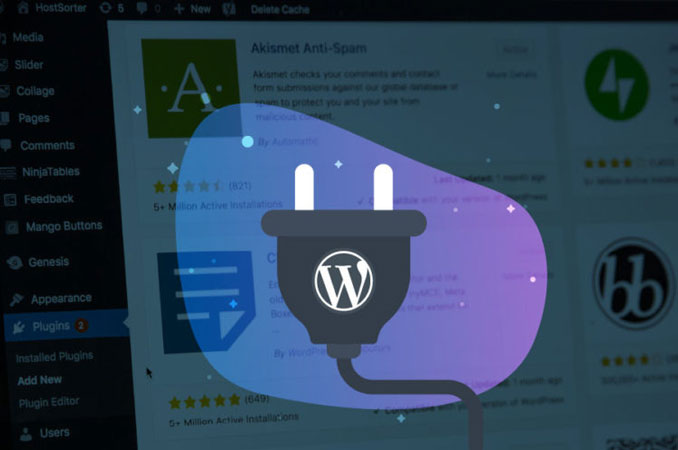
You can install WordPress with one click, and DreamHost's AI website tools can help you draft content and build a first version of your site.
Moving an existing WordPress site is free: you install DreamHost's migration plugin on the old site, and it copies everything over (DreamHost says your site stays online during the move). The free tool only handles WordPress, which I cover in the cons.
Free SSL Certificate

Every website on the plan gets a free SSL certificate. With SSL in place, data sent between a visitor's browser and your site is scrambled in transit, and the address bar shows HTTPS instead of a "not secure" warning. It doesn't stop hacking attempts by itself, but it's a basic requirement for any site today, and Google treats HTTPS as a ranking signal.
Free Daily Automated Backups
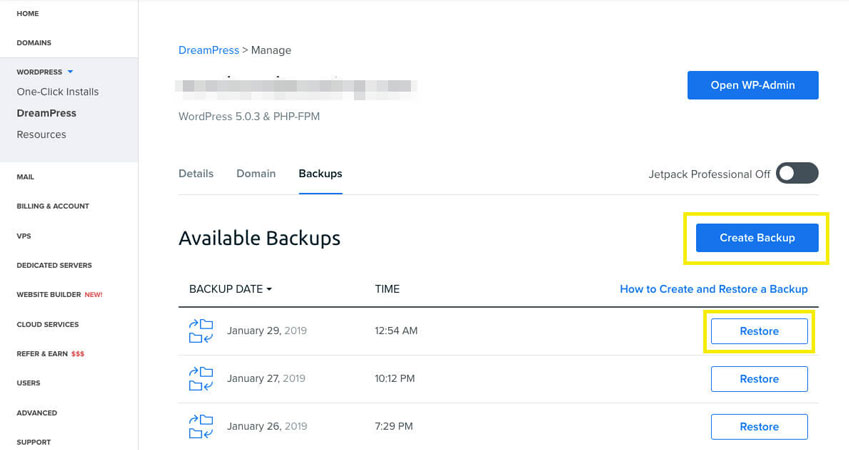
Launch includes daily automated backups at no extra cost. Many budget hosts only back up weekly or charge extra for daily copies, so this is a real advantage.
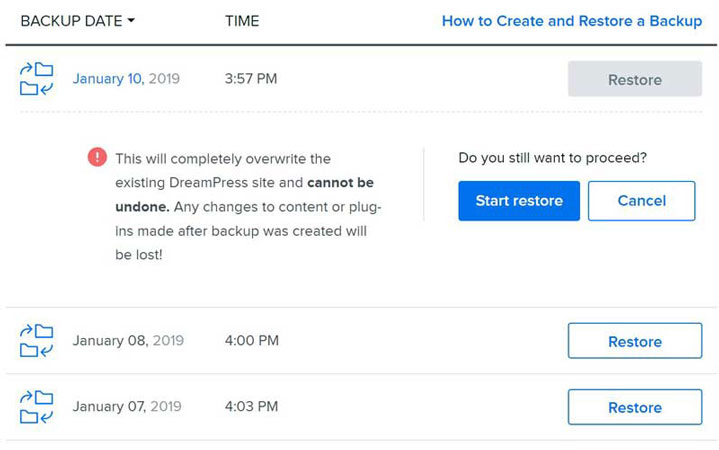
If a plugin update breaks your site, you can restore yesterday's copy instead of fixing the damage by hand. I still recommend keeping your own off-site backup of important sites, because a backup stored with the same host isn't a complete safety net.
Up to 25 Websites on One Plan
This is the biggest change from the old Shared Starter plan, which only allowed one website. Launch lets you host up to 25 sites from one account, which makes it useful for freelancers and small agencies, not only single-site owners.
Keep in mind that all your sites share the same plan resources. A few small sites are fine, but if several of them get busy, you'll want the Growth plan.
Unmetered Bandwidth and NVMe Storage
Every page view, image, and download your site serves uses bandwidth. DreamHost doesn't count it on any web hosting plan, so a viral post won't turn into a surprise bill.
Storage is 25 GB of NVMe SSD. NVMe drives read and write data faster than older SATA SSDs, which helps with database-heavy sites like WordPress. For most small websites, 25 GB is plenty: a typical WordPress site uses well under 5 GB unless it stores a lot of media.
Free Domain and Free Domain Privacy
On annual or multi-year billing, the plan includes a free domain registration for the first year. A .com normally costs $10.99 for the first year at DreamHost.
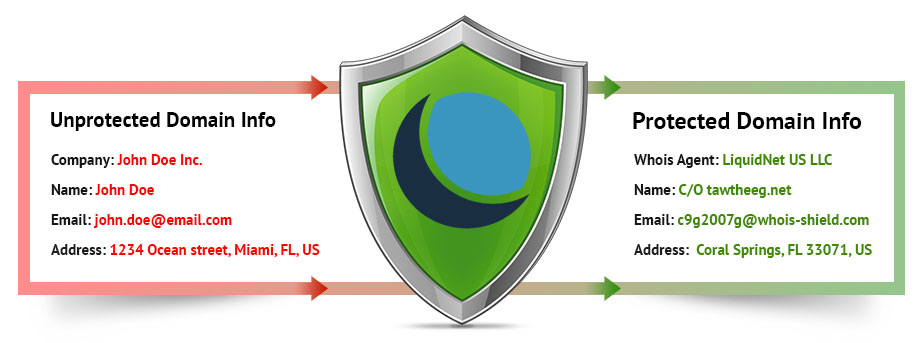
DreamHost also includes domain privacy for free, as long as the domain is registered with them. It hides your name, address, phone number, and email from public WHOIS lookups. Many registrars charge extra for this.
Uptime Guarantee
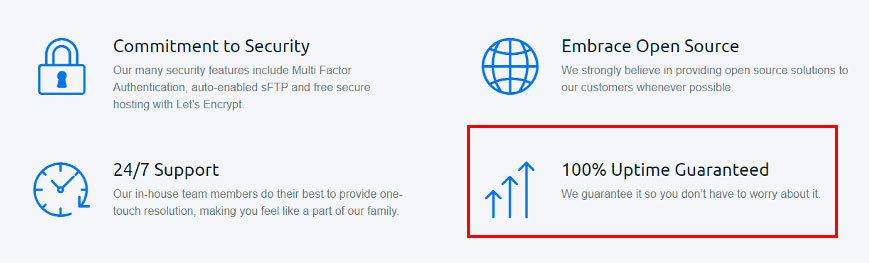
DreamHost offers a 100% uptime guarantee backed by service credits. That's a promise of compensation if your site goes down, not proof that it never will. DreamHost backs it with redundant cooling, emergency power, and constant monitoring in its data centers.
Custom Control Panel
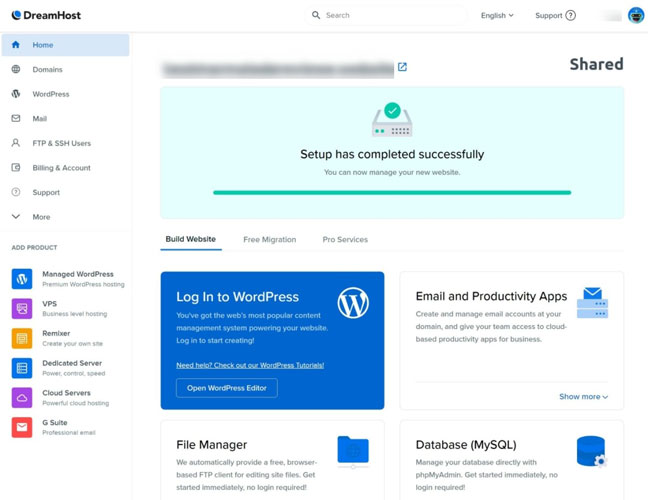
DreamHost Shared Hosting Control Panel
DreamHost uses its own control panel instead of cPanel. You manage your websites, domains, email, billing, and support requests from one place, so you don't need separate logins for hosting and billing.
24/7 In-House Support
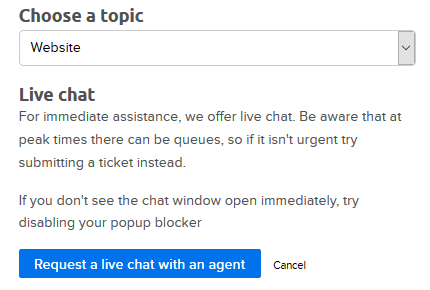
DreamHost's in-house support team is available 24/7 by live chat and email. Live chat used to be limited to US daytime hours, so this is a real improvement over the old Shared Starter days. DreamHost says its support team won a 2025 Gold Stevie Award for customer service.
There's no phone support on shared plans, though.
30-Day Money-Back Guarantee
You can cancel within 30 days of signing up and get a refund for the hosting. There are a few conditions in DreamHost's terms:
- The guarantee only applies to credit card and PayPal payments.
- Domain registrations aren't refundable, including the free domain that came with your plan.
- Email and other add-ons aren't covered.
DreamHost used to be known for a 97-day money-back guarantee. Its current terms only give 30 days, so don't count on the longer window you may have read about elsewhere.
3) Cons of DreamHost Web Hosting Launch
No plan is perfect. These are the drawbacks to weigh before you buy.
Email Is Only Free for 3 Months
The Launch plan includes a free 3-month trial of DreamHost's Professional Email, with up to 20 mailboxes. After the trial, email is billed separately.
Hosts that use cPanel usually let you create free mailboxes on your hosting account. DreamHost doesn't, so if you need email at your domain, add the email cost to your budget.
Paid Migration for Non-WordPress Sites
The free migration tool only works for WordPress. If your site runs on another platform, you'll have to move it yourself or pay DreamHost's Pro Services team. Moving a site built with Wix, Weebly, or Squarespace may cost extra.
Big Price Jump After Year One
Launch costs $2.89 a month for the first year, then $10.99 a month. Your second year costs almost four times as much as your first.
That's normal for shared hosting, but budget for the renewal price, not the sign-up price.
No cPanel Available
DreamHost doesn't offer cPanel. Its custom panel covers everything most website owners need, but if you're used to cPanel, it takes some time to find your way around.
You also can't create free cPanel-style email accounts, which is part of why email costs extra here.
US-Only Data Centers

DreamHost hosts websites in its US data centers only. If most of your visitors are in North America, that's fine. If your audience is in Europe or Asia, your site will load more slowly for them.
You can reduce the delay by putting a CDN such as Cloudflare in front of your site. A CDN keeps copies of your static files in locations around the world, so visitors download them from a nearby server.
4) Pricing
Here's what the Launch plan really costs.
Yearly Plan
- $2.89 per month for the first year, billed as $34.68 upfront (before tax).
- Renews at $10.99 per month after the first year ($131.88 a year).
- Includes the free domain for the first year.
For most people, the yearly plan is the best way to start. You get the lowest price and the free domain, and you have a full year to decide whether DreamHost is right for you.
Monthly Plan
DreamHost offers monthly billing on every web hosting plan. It costs more per month than the yearly plan, and the free domain only comes with annual or multi-year billing.
The monthly plan makes sense if you only need hosting for a short project. For anything longer, the yearly plan saves money.
Extra Charges and Add-ons
There are no hidden fees, but a few extras can add to your bill:
Domain name: A .com costs $10.99 for the first year if you buy it separately. Domain privacy is included for free.
Business email: Free for the first 3 months, then billed separately per mailbox.
DreamShield Protection: A paid malware scanning add-on. Read my DreamShield review before you buy it.
Pro Services: Paid help for things like non-WordPress migrations and site builds.
You don't need any of these to get started. If you're a beginner, the hosting plan on its own is enough.
5) Should you go with DreamHost Web Hosting Launch?
The features are clear. The real question is whether this plan fits what you need.
The Requirements
The Launch plan is a good fit if you:
- Want to host up to 25 websites, each with modest traffic.
- Want daily automated backups included in the price.
- Want a free domain for the first year and free domain privacy.
- Have most of your visitors in the United States.
- Use WordPress and want a host that WordPress.org recommends.
- Don't need cPanel.
It's a weaker fit if you need free email, have most of your audience outside North America, or want to keep your first-year price on renewal.
Launch or Growth?
If you're starting with one site or a handful of small ones, Launch is enough. Growth doubles the storage to 50 GB, allows 50 websites, and is sized for about 200,000 visits a month, for only $1.10 more per month in the first year.
The renewal gap is small too ($12.99 vs. $10.99 a month), so if you already expect one of your sites to get steady traffic, Growth is the safer choice. Otherwise, start with Launch and upgrade later.
Have Doubts on DreamHost?
DreamHost is a solid, established host. It's been around since 1997, it runs its own in-house support, and it's one of the few hosts recommended by WordPress.org.
The main things to accept before you sign up are the second-year price, paid email after the trial, no cPanel, and US-only data centers. If those don't bother you, DreamHost is a reliable choice for small websites.
Afraid of Trying a Different Panel?
The custom panel is the part that worries cPanel users most. In practice, it has all the everyday tools you need. The difference is mostly where things are in the menus.
The easiest way to find out is to try it. Sign up for the yearly plan, explore the panel, and set up your site. If it doesn't suit you, you can cancel within 30 days and get your hosting money back (the domain registration isn't refundable).
Conclusion
DreamHost's old Shared Starter plan is now Web Hosting Launch, and it's a better plan: 25 websites instead of 1, 25 GB of NVMe storage, daily backups, unmetered bandwidth, and 24/7 chat support.
The trade-offs are the renewal price ($2.89 a month for the first year, then $10.99), email that's only free for 3 months, and a 30-day refund window instead of the 97 days DreamHost used to offer.
If you're building a small WordPress site or a few of them for a US audience, I recommend the Launch plan on yearly billing. If you expect more traffic or more sites, go with Growth instead.