

WhoisGuard doesn't exist at Namecheap anymore. On March 17, 2021, Namecheap replaced it with Withheld for Privacy, which does the same job: it hides your name, address, phone number and email from public Whois lookups.
It's still free with every eligible domain registered or transferred to Namecheap, it's switched on by default, and domains that had WhoisGuard moved over automatically. So is WhoisGuard worth it? Yes. It costs nothing, so there's little reason to turn it off.
The main catch is coverage: it can't be used on about 40 TLDs, including .us, .uk, .co.uk, .ca, .de, .eu, .in, .com.au, .fr and .nl, because their registries don't allow it. This article still uses the WhoisGuard name in places because many people search for it.
I register several of my own domains at Namecheap, including webhostingadvices.com, so Withheld for Privacy is the privacy service offered on them.
Contents
What Is WhoisGuard ?
WhoisGuard was the domain privacy service Namecheap offered until 2021. It hid your personal information in the public Whois directory and showed the service's own contact details instead.
Let's take a closer look at what it did (and what Withheld for Privacy does now):
Spammers and scammers collect domain owners' details from public Whois records. A privacy service prevents this by putting anonymized contact details in the Whois record instead of yours.
Emails sent to that anonymized address are filtered for spam and then forwarded to the email address you choose. So people with a genuine reason to contact you still can, without seeing your real address.
At Namecheap, this service is now provided by Withheld for Privacy, a separate company that works with Namecheap. Namecheap says the provider doesn't need your personal information to do this: your details stay with Namecheap.
How Does WhoisGuard Work?
So how can a privacy service hide your personal information from Whois lookups and keep your domain running at the same time? The process is the same for most domain privacy services.
The service puts its own contact details in your domain's Whois results, hiding your private data. Your registrar still holds your real details, as ICANN requires, so your domain stays compliant while spammers only see the privacy service's information.
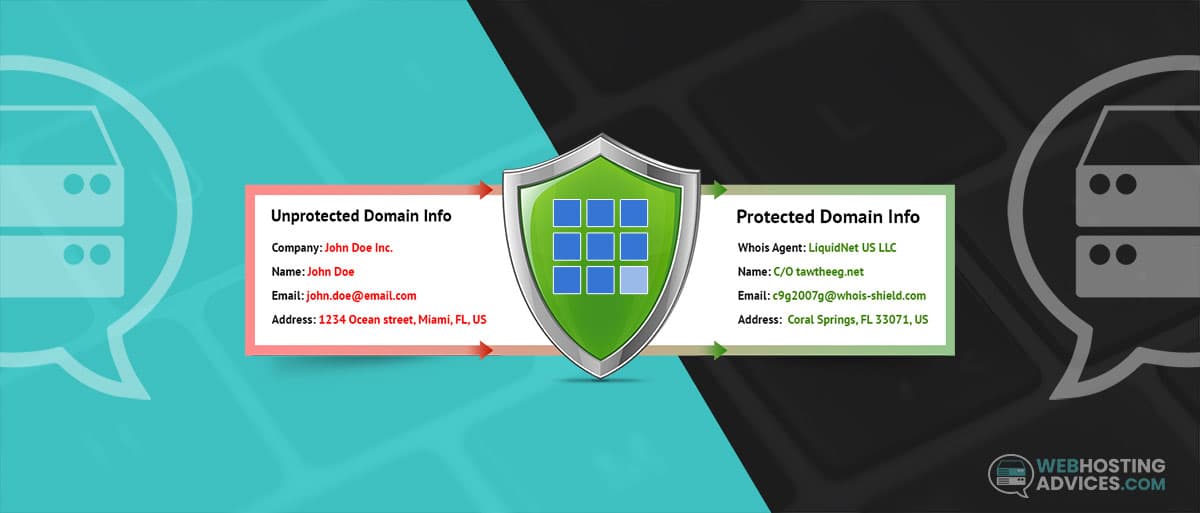
Here's an example of how a protected Whois record differs from an unprotected one:
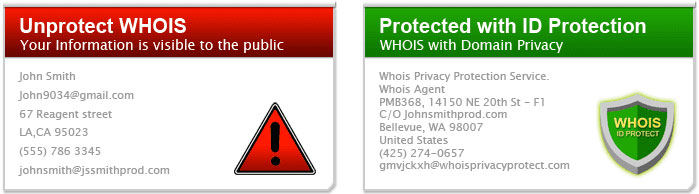
With Withheld for Privacy, the public record shows "Redacted for Privacy Purposes", the provider's name and address, and a unique email address ending in @withheldforprivacy.com.
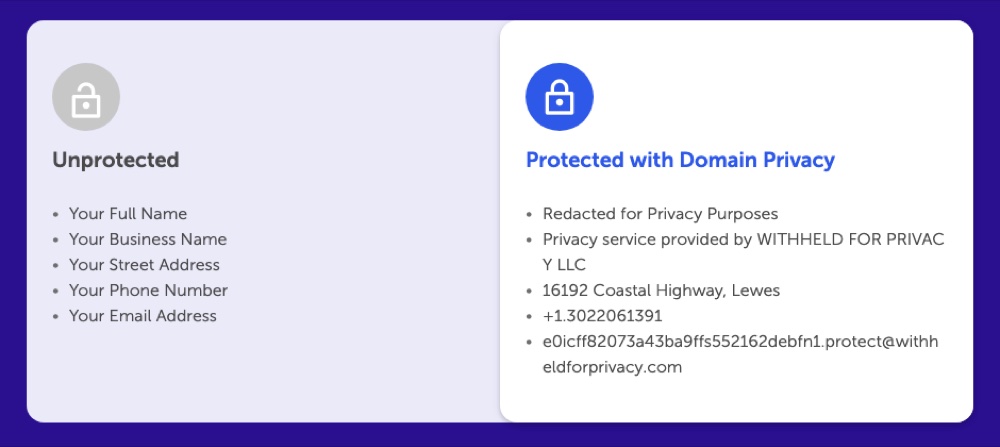 Namecheap's own example of an unprotected Whois record next to one protected by Withheld for Privacy (November 2026).
Mail sent to that address goes through a spam filter first, and whatever passes lands in your real inbox. The address can also rotate on a schedule, so once spammers pick it up, it soon stops reaching you.
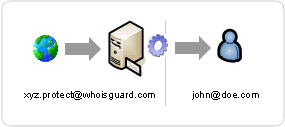 How email forwarding worked under WhoisGuard; Withheld for Privacy works the same way with its own addresses.
Do I Need WhoisGuard?
ICANN requires everyone who registers a domain to give their registrar accurate contact details, including name, postal address, email address and phone number.
That applies to individuals, business owners and organizations alike. In the past, most of those details appeared in the public Whois database, where anyone could look them up with a free Whois search tool.
Public lookups have changed since then. Because of privacy laws such as the EU's GDPR, many registrars now redact personal data, and ICANN's Registration Data Policy (in effect since August 21, 2025) only makes redaction mandatory where the law requires it. Elsewhere, it's up to the registrar.
So whether your details show up depends on your registrar, your country and your TLD. A privacy service removes that uncertainty: your details stay hidden, and you get a forwarding email address instead of exposing your own.
Pros & Cons Of WhoisGuard
Here are the pros and cons of WhoisGuard (now Withheld for Privacy) in detail:
Pros
- Safeguard Your Personal Details: Registering a domain means handing over your name, address, phone number and email. Without privacy, that information can be harvested by spammers or scammers and used for phishing or identity theft. A privacy service keeps it out of public records.
- Reduce Spam: The public record shows an anonymized address instead of yours, and incoming emails are filtered for spam before they're forwarded. You can rotate that address automatically if it starts getting junk.
- Prevent unwanted marketing outreach: Public contact details invite calls and emails from telemarketers and agencies selling web design, SEO and "domain renewal" services. Hiding them cuts most of this out.
- Free at Namecheap: It's included at no cost with every eligible registration or transfer, and you can add it free to an existing Namecheap domain from the Domain List.
Cons
- Not available for every TLD: Registry rules block it on about 40 extensions, including .us, .uk, .ca, .de, .eu, .in, .com.au and .nl.
- Makes Your Business Appear Less Transparent: Some customers check a domain's Whois record before buying from a site. If they only see a privacy service, it can raise doubts about who runs the business.
If you want to show your ownership publicly, you can turn the service off at any time in your Namecheap account and turn it back on later.
Where Can I Get WhoisGuard Privacy Protection?
You can't buy WhoisGuard anymore. Its replacement, Withheld for Privacy, comes with domains from Namecheap, an ICANN-accredited domain registrar and web hosting company.
Namecheap doesn't charge for it: every domain you register or move to Namecheap gets it at no cost for as long as the domain stays there. The cart includes it and switches it on by default, so there's nothing to set up.
Your privacy subscription runs from the purchase date, not the date you activate it. It only works for domains registered with Namecheap.
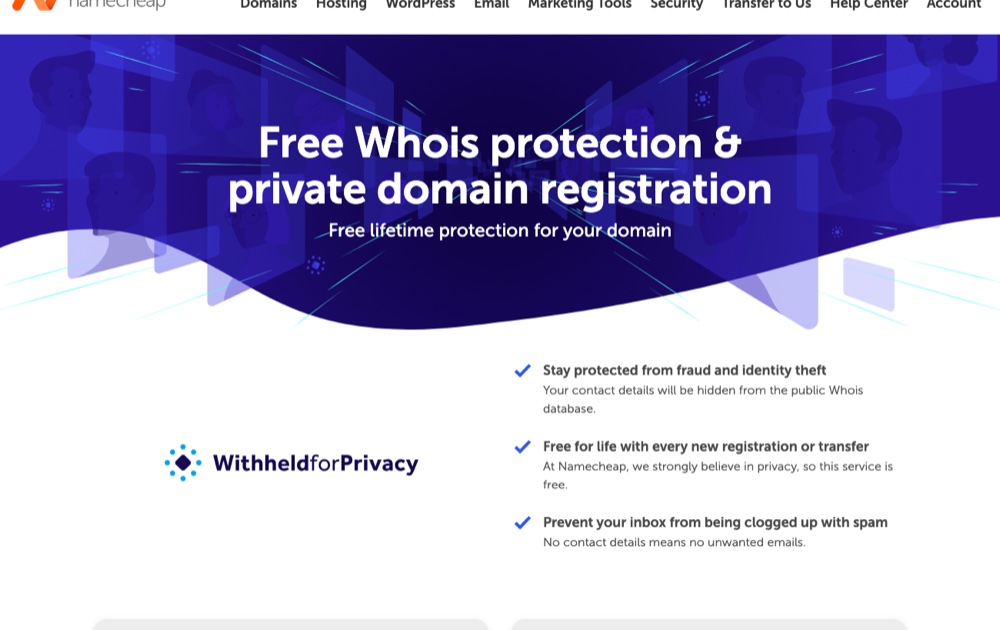 Namecheap's domain privacy page: free Whois protection through Withheld for Privacy (November 2026).
Not every registrar includes privacy for free. If you're comparing registrars, see NameSilo vs Namecheap, and check how Bluehost domain privacy protection and SiteGround domain privacy work before you register a domain with a hosting company.
Conclusion: Is WhoisGuard Worth It?
So, is WhoisGuard (now Withheld for Privacy) worth it? Yes. Namecheap includes it free and turns it on by default, so there's no reason to switch it off unless you want your ownership details public.
If you want to keep your personal information away from spammers, scammers and cold callers, domain privacy is worth having on every domain that supports it. Just check the TLD first: on extensions like .us or .uk, you won't be able to use it at all.