

A cheap VPS for VPN is great for people who want to run a private VPN or want to start a service with a very low investment amount.
Tools like Wireguard, OpenVPN, UTunnel, etc. allow you to run the VPN service on your virtual server.
We have curated the best VPS providers that allow VPN hosting and are fully secured and protected. With these, you can connect remotely to use your VPS as a Home VPN.
Excited? Let’s start the list.
Contents
#10 Cheap VPS for VPN
Ideally, you can find the VPS that offers anonymity and unmetered bandwidth. Here are a few options.
1. Bitlaunch (Best for Anonymity)

If you are a fan of anonymity, you would have surely heard about Algo VPN. It’s a set of open-source scripts that sets up a personal WireGuard VPN on your own server, with a focus on privacy.
Bitlaunch has a dedicated Algo VPN offer: you launch a server, run the Algo scripts on it, and pay with cryptocurrency (Bitcoin, Litecoin or Ethereum). Signing up only takes an email address and a password.
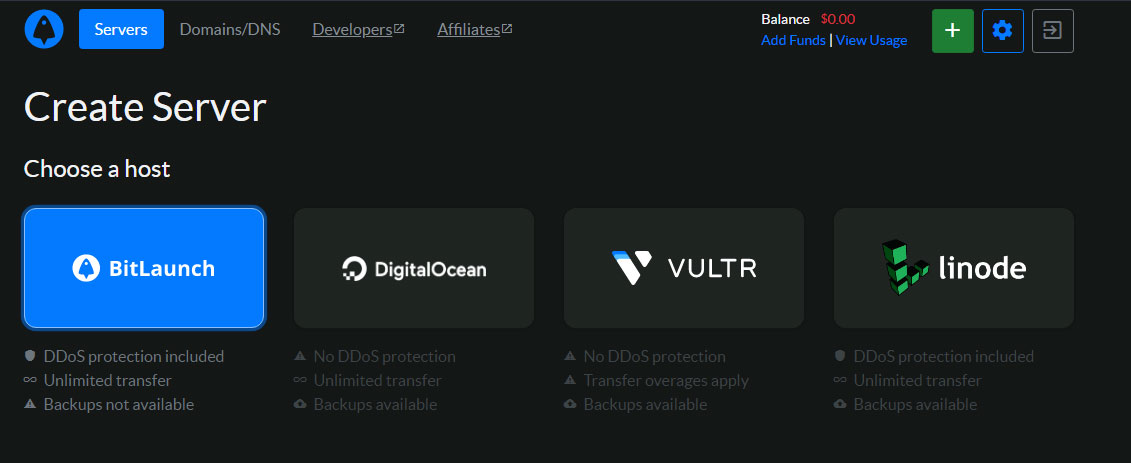
Like the concept of Algo VPN but don’t want to host it on Bitlaunch’s own servers? From the same account, you can also launch servers at DigitalOcean, Vultr or Linode (now part of Akamai) and still pay with crypto. On the other hand, if you want to use Bitlaunch but don’t want to use Algo VPN, you can go with their other VPS plans.
On their plans, you can install OpenVPN, WireGuard, Outline, Shadowsocks R and other privacy apps with one click. Not to mention, Algo VPN does use WireGuard in the setup.
The major difference between these options lies in transparency and convenience. Algo VPN gives you more visibility over the installation process, while the one-click apps are quicker to set up.
Coming to Bitlaunch’s own servers, you will get unlimited transfer, and DDoS protection is included for free. On Vultr servers launched through Bitlaunch, transfer overages apply.
The charges are on an hourly basis: you top up your balance and pay for each hour the server runs. Therefore, there are no significant commitments needed.
It uses KVM for virtualization, with Intel Gold CPUs and SSD storage. Therefore, you will get full control over the server.
You can choose from multiple operating systems including Windows. For Windows, you will also get RDP.
Bitlaunch’s own servers run in the Netherlands, Romania, the UK, Los Angeles, Dallas, Chicago and Singapore, and its partners add locations across North America, Europe, Asia and Australia. One of the disadvantages is the availability of the plans, since a plan might not always be available at your preferred location.
You can sign up for free and choose the server of your choice. The pricing and plans are shown after you sign up, and support can add a small balance to your account for a free trial of a few hours.
If you don’t want to use the account anymore, you can delete it. Bitlaunch says your data is destroyed when you delete a server or your account.
Starting price: shown in the control panel after sign-up (prices for new servers on Bitlaunch’s own platform rose by 20% on August 1, 2026).
Key features of Bitlaunch
- Bandwidth: Unlimited transfer on Bitlaunch’s own servers.
- Server locations: 27 locations in North America, Europe, Asia and Australia (own and partner servers).
- Dedicated IPs: IPv4 is included.
2. Kamatera (Best Runnerup)
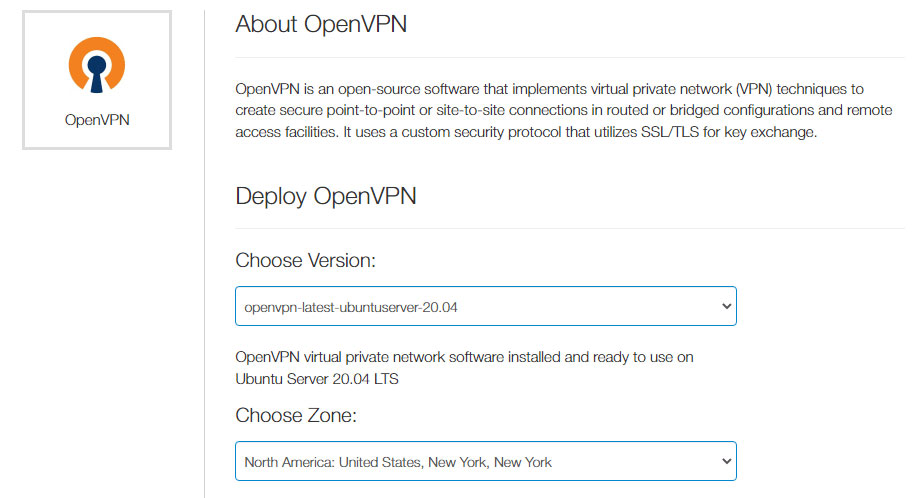
Kamatera, a cheap VPS for VPN with infinite possibilities, offers more than 100 OS images and a marketplace of ready-made apps. You can install any app with a click of your mouse. For VPN, the marketplace includes OpenVPN and UTunnel VPN.
For reliability, Kamatera says there is no single point of failure. It backs its servers with a 99.9% uptime guarantee.
If you are afraid you might have more traffic, their load balancer will help you. During traffic spikes, a load balancer will divide the traffic into different server instances.
By this, your VPN stays online even during peak time.
Their cloud servers run in purpose-built, high-end data centers. They use Intel Ice Lake processors and NVMe SSD storage.
It’s perfect if you are looking for an affordable option as you can start with no commitments and they allow unlimited scale in and out. Their simple management console makes it easier to manage your cloud. You can also use their API to automate your cloud.
Kamatera says it runs 25 data centers, and its configurator lists 21 locations to choose from. You can also add multiple cloud instances to offer more locations to your VPN users.
You can get started at a very low price. The private cloud is fully customizable.
In simple words, you can add more resources only if needed. This allows you to cut down on the cost.
If you are still not convinced, you can take a free trial for 30 days and then decide whether it’s right for you or not. The trial covers one server worth up to $100 with 1 TB of traffic, and it requires a valid credit card.
Starting price: $4 per month.
Key features of Kamatera
- Bandwidth: 5 TB of traffic per month on monthly servers (1 TB in Hong Kong, Sydney, Tokyo and Singapore), or unmetered traffic at up to 50 Mbps. Hourly servers pay $0.01 per GB.
- Server locations: North America, Europe, Asia, Australia, and the Middle East.
- Dedicated IPs: 1 IPv4 included, up to 4 per server ($1 per month for each extra IP).
3. FlokiNet (Best for Offshore hosting)
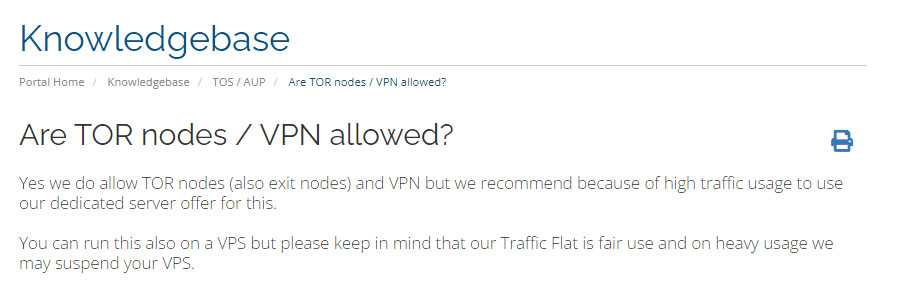
People usually prefer offshore hosting to run a VPN. So, if you are looking for a cheap VPS for VPN in offshore locations, FlokiNet is an excellent choice. To begin with, it allows Tor nodes, exit nodes, and VPNs on its network.
Its VPS plans run in 4 offshore locations: Romania, Iceland, the Netherlands and Finland. DDoS protection with more than 1 Tbps of filtering capacity is included in all of them.
It’s a KVM-based VPS server. To manage and control the server, you will also get a Virtual IPMI panel. It’s a remote console allowing you to manage your server from anywhere, even while it’s offline.
Apart from the panel, you will get fewer ready-to-install scripts. Therefore, you will have to set up the VPN yourself, although FlokiNet’s knowledgebase has a guide for WireGuard with WG-Easy.
To make the installation and management easier, you can add cPanel from the checkout page. They are an authorized cPanel partner.
They make it easy to scale your server. You can upgrade the plans when the traffic increases.
Each location and plan has its own traffic limit, from 1 TB on the entry Iceland plan to 3 TB on the entry plans elsewhere. If you need more, you can order extra traffic at checkout.
Overall, there is enough flexibility for you to run your VPN.
Once you start generating enough revenue, their dedicated servers are the perfect choice to run your business. Till then, you can start with VPS. Their pricing varies depending on the location you choose.
FlokiNet is known for offshore, privacy-focused hosting, but its Acceptable Use Policy still applies to every VPS. So, read it before you launch, and follow the law of the country where your server runs.
Starting price: €7.99 per month in Romania (€8.99 in Finland, €9.50 in the Netherlands and €10.99 in Iceland).
Key features of FlokiNet
- Bandwidth: 1 Gbit uplink with 1 to 3 TB of traffic on the entry plans (extra traffic at checkout).
- Server locations: Europe (Romania, Iceland, the Netherlands and Finland).
- Dedicated IPs: 1 IPv4 & /64 IPv6 (up to 4 extra IPv4 at checkout).
4. Impreza (Best for Tor Users)

Impreza is yet another Tor-friendly affordable VPS for hosting your VPN. They are an active contributor to the Tor project, and Impreza says it donates $10 a month to the Tor Project for every server contracted.
With that being said, you can run Tor nodes, including exit nodes, and VPNs. However, if you have high traffic for these nodes, they recommend using their dedicated servers.
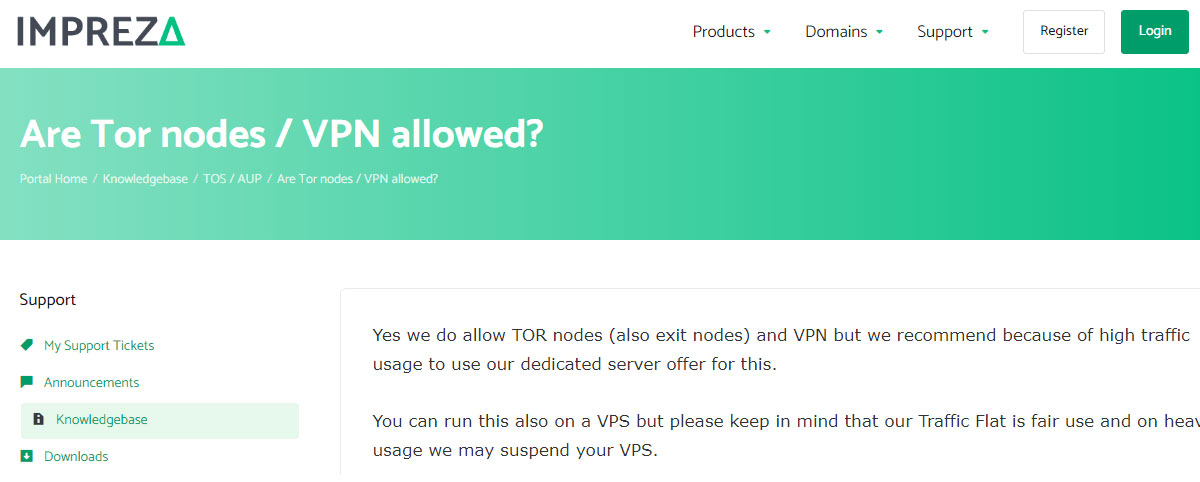
Their VPS plans come with 5 TB of bandwidth per month. However, they believe in fair traffic usage.
If you are getting heavy traffic, they might even suspend your VPS. Once you start getting enough traffic, you can upgrade to a better hosting solution.
VPS plans are available in 9 locations: Romania, Ukraine, Russia, the Netherlands, the USA, Switzerland, Hong Kong, Lithuania and Finland. Its dedicated servers cover many more countries, and you can move a VPS to another location from the dashboard (check the fee first).
The company is registered in Seychelles, and its team works from several countries.
You can choose your preferred OS (AlmaLinux, CentOS, Debian, Rocky Linux or Ubuntu), and server customization is available at checkout. DDoS protection is included, and add-ons such as server backups are available.
The service uses KVM for virtualization and comes with a 99.9% uptime SLA.
Support is available 24/7 via Telegram, email, live chat and tickets. They offer multiple services such as Google Workspace, Sitelock, VPN, backups, etc. but it lacks one-click installation for tunnel apps such as OpenVPN, WireGuard, etc.
Further, they offer VPN connection services for anonymity. If you are planning to stay anonymous, Impreza is a good fit, with a no-KYC policy and a sign-up that doesn’t even require an email address. They accept crypto payments (Bitcoin, Monero, USDT and TRX).
Every VPS plan includes a .onion domain, and you can register .onion domain names here.
Starting price: $9 per month.
Key features of Impreza
- Bandwidth: 5 TB per month on every VPS plan.
- Server locations: Europe, North America (USA), and Asia (Hong Kong).
- Dedicated IPs: IPv4 address, with IPv6 preconfigured.
5. Vultr (Best Price)
Vultr is one of the cheap VPS for VPN hosting. It’s a cloud hosting service known for the best control panel and management. Their panel is easily accessible from a mobile phone as well.
So, if you want to make small changes to the server, you can do it from your mobile device too.
Coming to the features, Vultr offers DDoS protection as an add-on, at $10 per month per instance for 10 Gbps of mitigation. Its SLA promises 100% uptime for the network and host node, with service credits if it’s missed.
Their platform-agnostic infrastructure allows you to bring your own IP space. You can also reserve IPv4 and IPv6 space in your account. After that, you can attach the IP from your accumulated pool to any of Vultr’s instances.
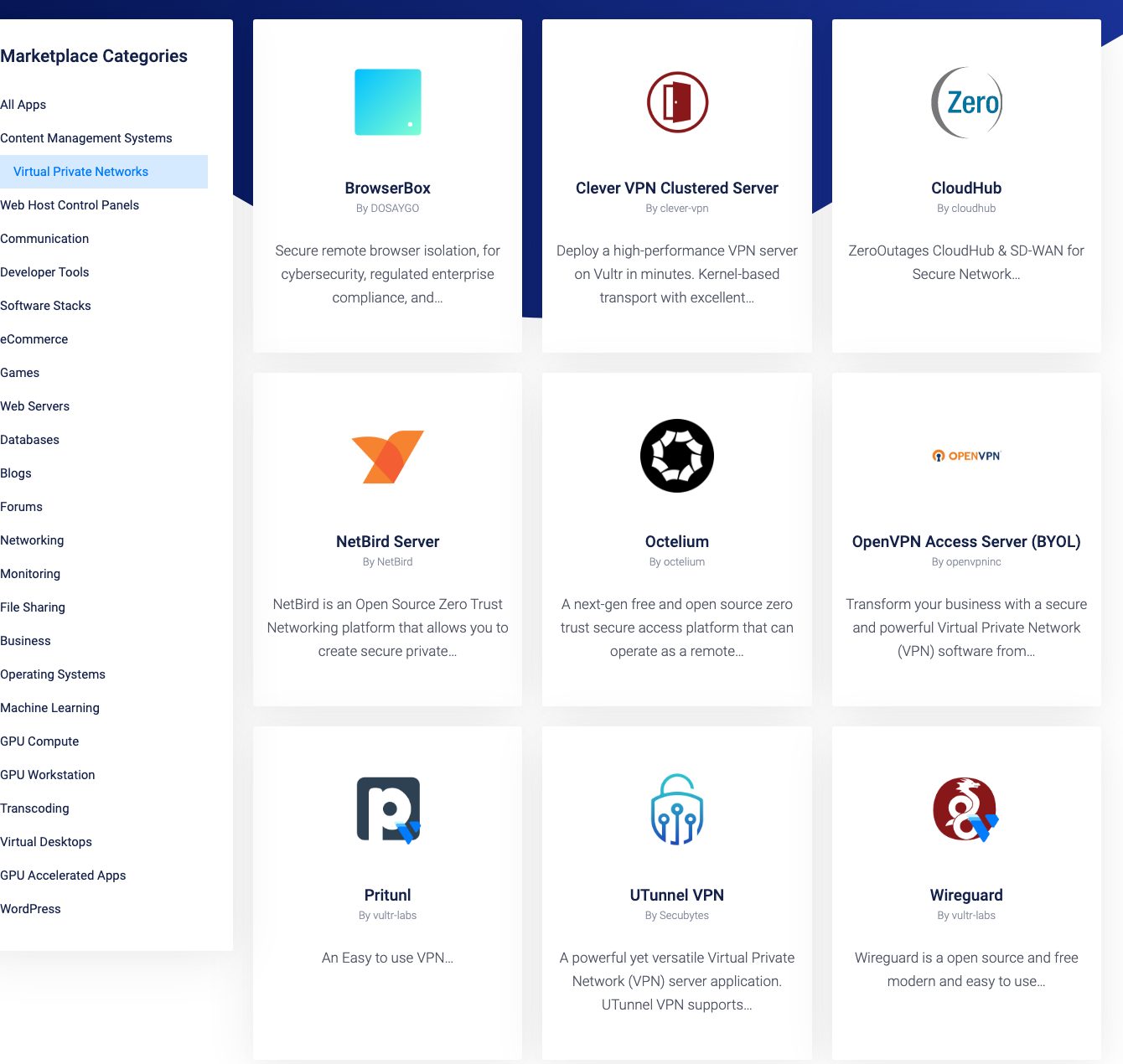
To run a VPN, they have a one-click marketplace. Its VPN category includes WireGuard, OpenVPN Access Server (bring your own license), Pritunl, UTunnel VPN and NetBird.
The WireGuard app preconfigures the VPN and gives you ready-to-use client configs. So, you don’t have to install it manually.
Not to mention, the marketplace consists of all the other apps such as web panels, developer tools, monitoring, etc.
They have 34 regions to choose from. You will also get multiple OS templates.
If you can’t find one, you can upload your custom ISO. If you are looking to automate your cloud, their powerful API is useful.
You can start with the base plan as it’s best for beginners. However, you need to keep in mind that Vultr charges for bandwidth overage, at $0.01 per GB of extra outbound traffic.
So, make sure you monitor the server. Luckily, Vultr’s server health monitoring features are of great help.
The cheapest plan is IPv6-only, so it can’t reach IPv4-only websites without extra setup. For a VPN, most people will want at least the $3.50 plan with an IPv4 address.
Starting price: $2.50 per month for the IPv6-only Regular plan (1 vCPU, 0.5 GB RAM, 10 GB SSD), available in only a few locations. The same plan with IPv4 costs $3.50, and the widely available Regular plan starts at $5 per month (1 vCPU, 1 GB RAM, 25 GB SSD).
Key features of Vultr
- Bandwidth: 0.5 TB on the $2.50 and $3.50 plans and 1 TB on the $5 plan; extra outbound traffic costs $0.01 per GB.
- Server locations: North America, South America, Europe, Asia, the Middle East, Africa, and Australia.
- Dedicated IPs: Customizable IPv4 and IPv6 addresses.
6. DigitalOcean (Easiest VPN Setup)
DigitalOcean is a popular cloud provider, and its Droplets (cloud virtual machines) are a cheap, simple base for a self-hosted VPN. Running your own VPN server means your traffic goes through a machine you control instead of a commercial VPN company.
DigitalOcean gives you three ways to set it up, depending on your experience: Outline for the easiest managed setup, 1-click VPN apps from its Marketplace, or its Community tutorials if you want to install and configure something like OpenVPN yourself.
Droplets are unmanaged, so you handle updates and security. In return, you get root access, and you can resize the Droplet later if your VPN needs more resources. You can create servers from the control panel, the API, or the command line.
New accounts get a $5 free credit, valid for 90 days, which is enough to test a small VPN server. Billing is per second (with a 60-second minimum), so you only pay for the time the server runs.
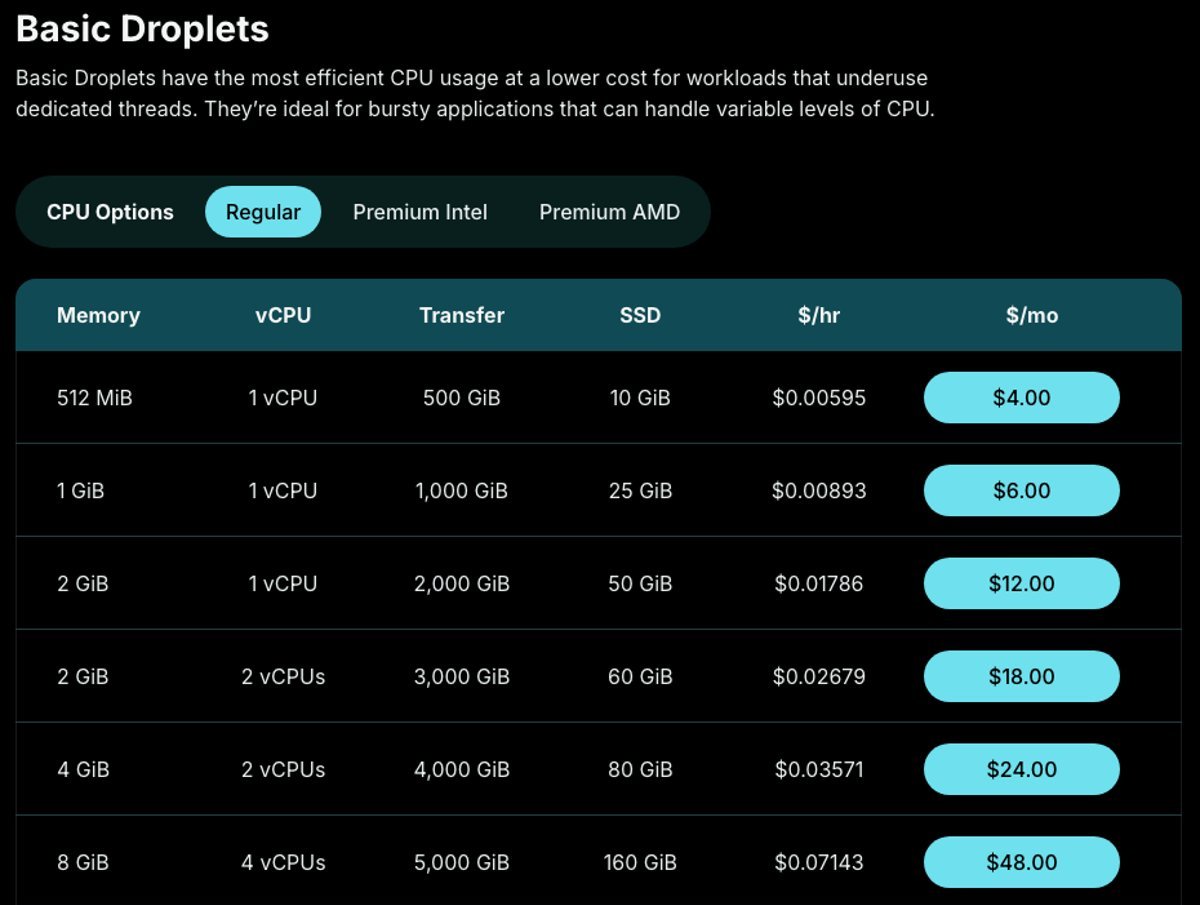
Starting price: $4 per month for the smallest Basic Droplet, which has 1 vCPU, half a GiB of memory, 10 GiB of SSD storage and a 500 GiB monthly transfer allowance.
Key features of DigitalOcean
- Bandwidth: 500 GiB of outbound transfer on the $4 plan, and 1,000 GiB on the $6 plan with 1 GiB of RAM.
- Server locations: North America, Europe, Asia, and Australia.
- Setup options: Outline, Marketplace 1-click apps, or step-by-step Community tutorials.
7. Hostinger

Hostinger is great for people who have very specific requirements. It comes with a 99.9% uptime guarantee and full root access.
They use NVMe SSD storage and AMD EPYC processors to increase speed. The VPS plans use KVM virtualization.
If you are looking to try out VPN on a server, Hostinger is a good choice. The initial cost is very much less. However, the price climbs to almost double the current price at the time of renewal.
The server comes with Wanguard DDoS filtering and a managed firewall. You don’t have to worry about the server data as they take free weekly backups.
Scaling your server is easier because of the multiple plans Hostinger offers. There are 4 VPS plans: KVM 1, KVM 2, KVM 4 and KVM 8.
Setting up the VPN is easier than it used to be. Hostinger has OS templates with WireGuard (with the wg-easy web interface) or OpenVPN preinstalled, so you pick the template and configure the VPN from your browser.
All resources are isolated and belong to you. There will be no noisy neighbors stealing your resources.
They have 10 data centers across 4 continents. So, you can set up your VPN in any of them, and Hostinger says you can move a VPS to another of its locations later.
You will get tutorials of all kinds directly from the knowledge base or blogs. Along with this, the panel and interface are beginner-friendly, and an AI assistant can run server tasks from plain-language prompts.
Hostinger offers 24/7 support to help you with all your queries. The VPS page clearly shows the resources and the renewal price of each plan.
So, we can say the company believes in transparency. On the negative side, there are almost no customizations available on the plan.
In simple words, you will have to go with the pre-defined plan. You can’t add extra storage or bandwidth to the existing plan.
Starting price: $6.49 per month for KVM 1 on a 24-month term (renews at $11.99 per month)
Key features of Hostinger
- Bandwidth: 4 to 32 TB at 1 Gbps.
- Server locations: North America, South America, Asia, and Europe.
- Dedicated IPs: A dedicated IPv4 address (IPv6 is also supported).
8. InterServer
InterServer is a vanilla VPS that comes with the necessary features you will need. It’s highly recommended for people who want to start small and scale higher.
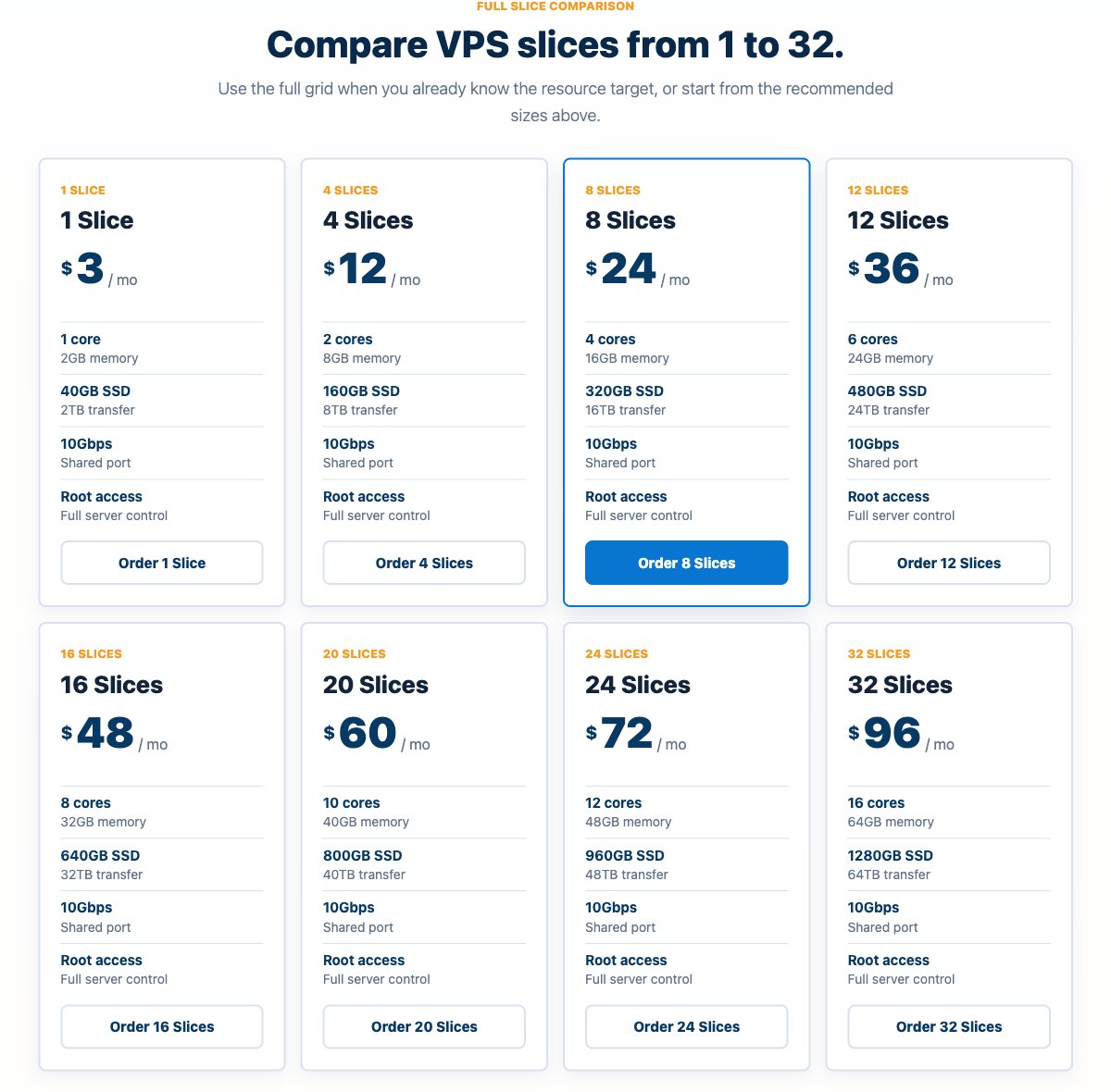
The VPS works in slices, and plans scale up to 16 cores (32 slices). Not to mention, you can scale with just a few clicks.
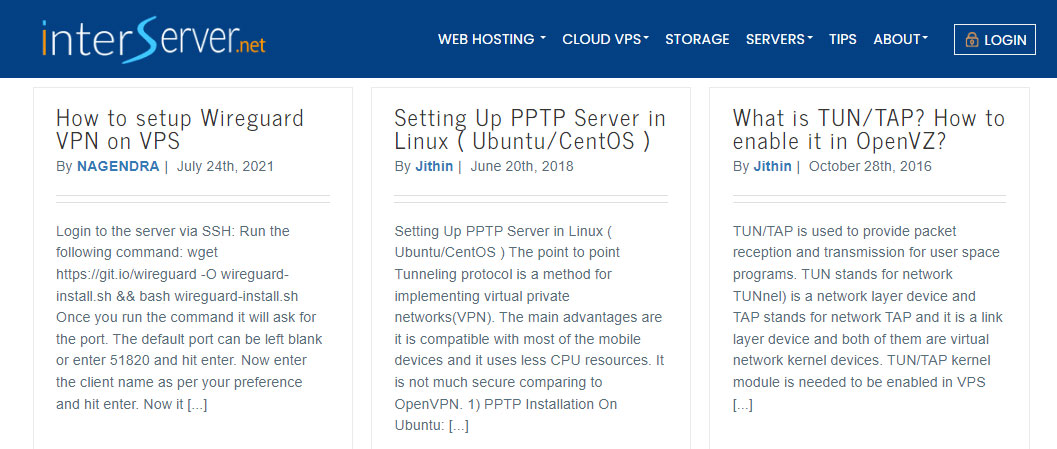
Coming to the VPN setup, you will have to set up and install the tunnel software manually. The Linux VPS runs on KVM, so you have full control over the server.
The support is a bit tricky. You will only get managed support from 8 slices ($24 per month), and below that the VPS is unmanaged.
To run your VPN, you can check out their tips section, which has tutorials on setting up WireGuard and a PPTP server, and on enabling TUN/TAP.
The SLA guarantees 99.9% network availability. You can add DirectAdmin, cPanel, Plesk or Webuzo if you need a control panel (licenses cost extra).
If you want to protect your data, KVM VPS users can take manual snapshots and backups, stored for 45 days. Free DDoS protection is included for all customers.
On the negative side, they only have servers in the United States: the New York City metro area, Dallas and Los Angeles.
Starting price: $3 per month per slice (1 core, 2 GB RAM, 40 GB SSD, 2 TB transfer).
Key features of InterServer
- Bandwidth: 2 TB per slice (2 to 64 TB) on a shared 10 Gbps port.
- Server locations: North America (USA).
- Dedicated IPs: 1 IPv4 address included.
9. Mochahost
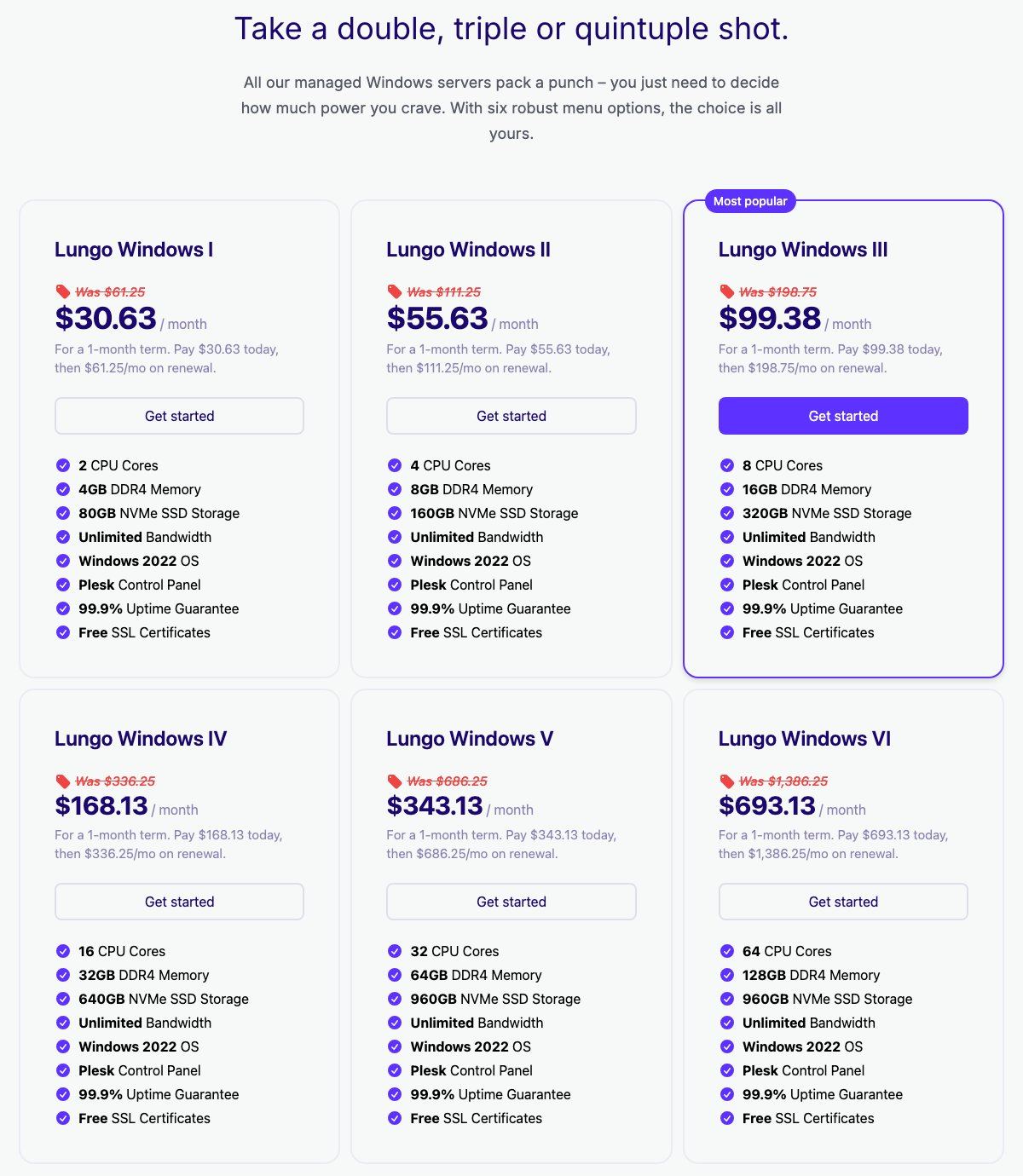
Mochahost is a managed hosting service with 24/7 support. Its VPS lineup is now fully managed: managed Windows VPS plans with Plesk, and managed Linux servers with cPanel.
The Windows plans come with a 99.9% uptime guarantee, and the managed Linux plans with 99.95%.
You will get more resources as you upgrade your plan. The entry Windows plan has 2 CPU cores, 4 GB of RAM and 80 GB of NVMe storage, and the top plan has 64 cores and 128 GB of RAM.
For security, the managed servers use CloudLinux and Imunify web application firewalls. Every plan also includes free SSL certificates.
Every plan includes unlimited bandwidth on a 1 Gbit/s connection per server, which suits a VPN that moves a lot of data.
Because the servers are managed, the support team handles the technical stuff for you, and migrations are free. A few tech features that can be useful for VPN include SSH access and AnyCast DNS management.
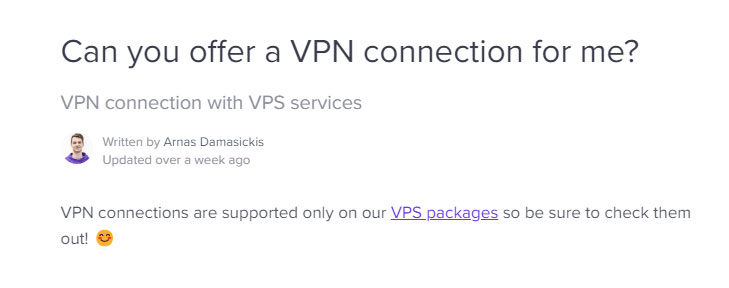
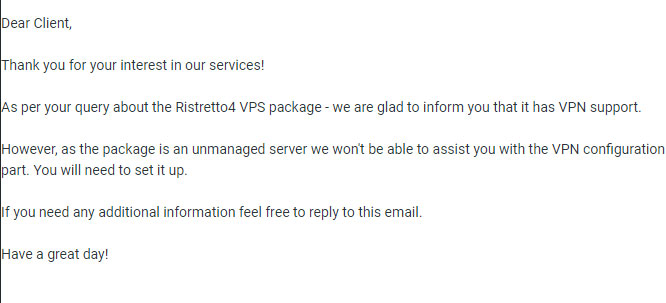
An older support reply (shown above) confirmed VPN support on an unmanaged package, but said the team wouldn’t help with the configuration. So, ask support how far it will help with your VPN software before you order.
Starting price: $30.63 for the first month of the entry Windows VPS (then $61.25 per month). Managed Linux servers start at $57.50 per month on a 1-year term.
Key features of Mochahost
- Bandwidth: Unlimited at 1 Gbit/s.
- Server locations: North America (United States).
- Dedicated IPs: 1 dedicated IP on the managed Linux plans.
10. OVH
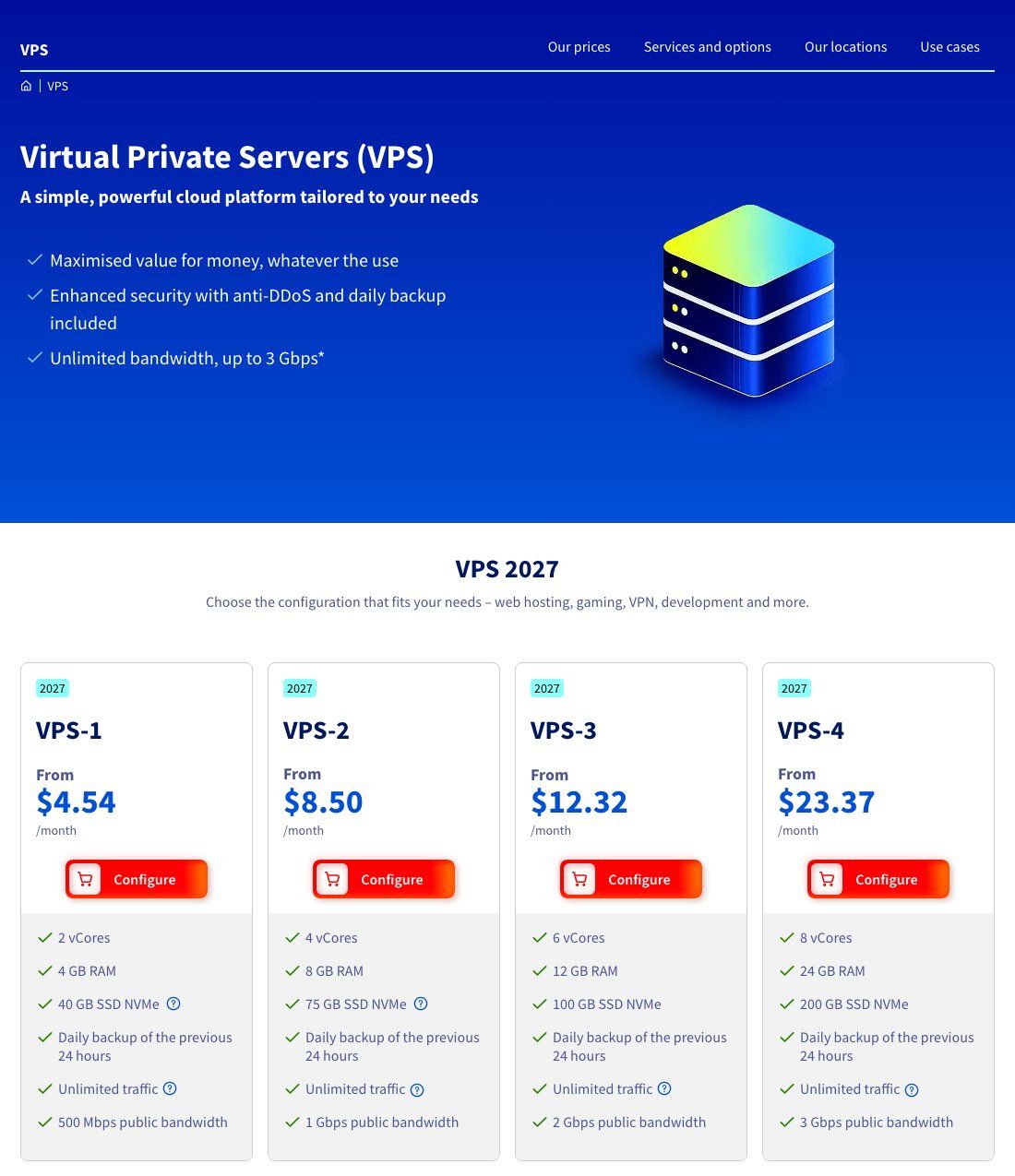
OVH (OVHcloud) is a cheap VPS for VPN offering unlimited traffic at a fixed bandwidth, from 500 Mbps on VPS-1 to 3 Gbps on VPS-4. They provide complete control over the server with isolated resources.
For security, anti-DDoS protection is included with all the servers. Every VPS also gets a daily automatic backup, kept on a rolling 7-day basis.
The provider also supports Windows OS, except in Local Zones. Their add-ons, including additional IPs, start at a low price.
If you are expecting traffic spikes, you can also add a load balancer on your VPS. The server is reliable as you are getting an SLA uptime guarantee of 99.9%.
You will get an interactive control panel with all the necessary options. It also includes monitoring and intervention options.
As it’s a cloud infrastructure, scalability is easy. It takes one click to upgrade your server, without migrating data, and premium backups start at $1.40 per month.
Support is where OVH gets the most criticism. On Trustpilot, OVHcloud scores 3.8 out of 5 from about 9,000 reviews (October 2026), and many of the 1-star reviews complain about slow ticket replies and templated answers, although other customers report quick fixes.
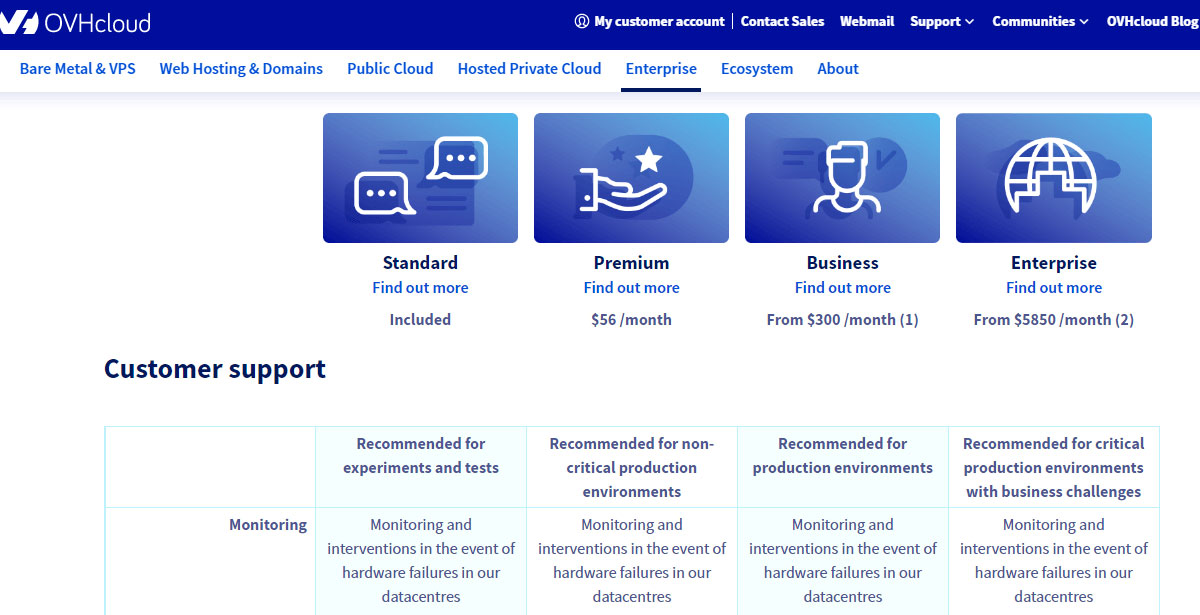
The included Standard support handles incidents 24/7 by phone, ticket and live chat. For faster, more hands-on help, the paid levels start with Premium support at $56 per month on a 12-month subscription.
So, if you are a complete beginner, you may prefer a provider with more hand-holding. OVH’s guides and community cover the basics of setting up and securing a VPS.
Their Mumbai, Singapore and Sydney data centers have a monthly traffic quota. The speed drops to 10 Mbps once the quota is used up, and the quota ranges from 500 GB on VPS-1 to 3 TB on VPS-4.
Starting price: $4.54 per month for VPS-1 (2 vCores, 4 GB RAM, 40 GB NVMe).
Key features of OVH
- Bandwidth: Unlimited traffic at 500 Mbps to 3 Gbps (with a monthly quota in Asia-Pacific).
- Server locations: North America, Europe, Asia, and Australia.
- Dedicated IPs: 1 IPv4 and native IPv6, additional IPs available.
Things to look for on a VPN server
Not all hosting providers offering VPS allow you to install a VPN. So, you need to keep a few key points in mind while choosing a cheap VPS for a VPN setup.
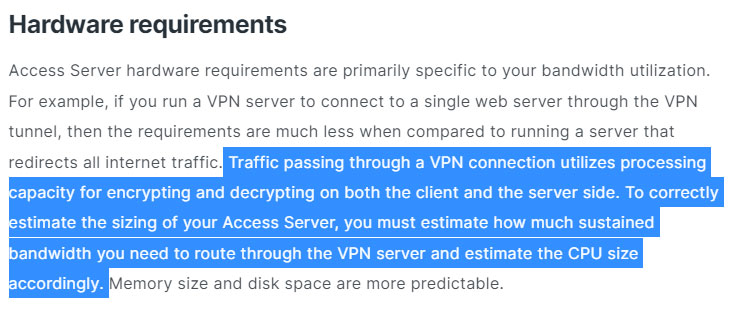
Network Features
To run a VPN, you will need TAP/TUN. So, make sure your VPS provider allows this. In some cases, you will need to open a support ticket to turn the feature on.
Bandwidth
Bandwidth determines the amount of traffic your VPN will use on monthly basis. Usually, a VPN has a very high monthly bandwidth. So, make sure you are getting enough traffic limit on your VPS.
Server Location
Make sure the server location is near the client’s location or near an internet PoP. Further, you also need to see if the VPS is in the preferred location of your customers. For instance, your customers might want to use a VPN that offers offshore locations.
Security, Privacy, and Logs
It’s important to keep your identity and activity a secret as it might be uncomfortable knowing another company has access to your real name and the activities you perform on your VPS-turned-VPN. So, you need to look for VPS providers that guarantee anonymity and privacy.
You can check the VPS provider’s privacy policies to see if they keep access logs, connection logs, or other logs.
Conclusion
With these cheap VPS for VPN, you can run a VPN service or use a VPN for your personal use. This protects your data as well as provides you with a safer and cheaper option instead of paying for a commercial VPN.
We have already declared which host is best for which reason. If you are still confused, we would recommend you go with either Kamatera or Bitlaunch.
Kamatera provides all the features you will need. The best thing about Kamatera is that you can customize and configure the server as per your need.
So, it will help you in saving a few bucks. You can also install VPN tools with just a click.
On the other hand, Bitlaunch is amazing if you are looking for privacy and protection, with one-click VPN apps and an Algo VPN option. You can also launch DigitalOcean, Vultr or Linode servers through Bitlaunch and pay for them with crypto.
FAQ (Frequently Asked Questions)
Can a VPS be tracked?
VPS is encrypted by a firewall and is a safer option to protect yourself from attackers. You (as an owner) can track and monitor your VPS.
Can a VPS be used as a VPN?
VPS is a server provided by the hosting company. You will have to set up a VPN using Wiregaurd, OpenVPN, or any other tool on the VPS.
Should I use VPS or VPN?
A VPS is a server where you can host your script. VPN is used to protect your online activities. Depending on your needs, you can use either VPS or VPN.